New Puppy Training: A Printable 4-Week Starter Guide
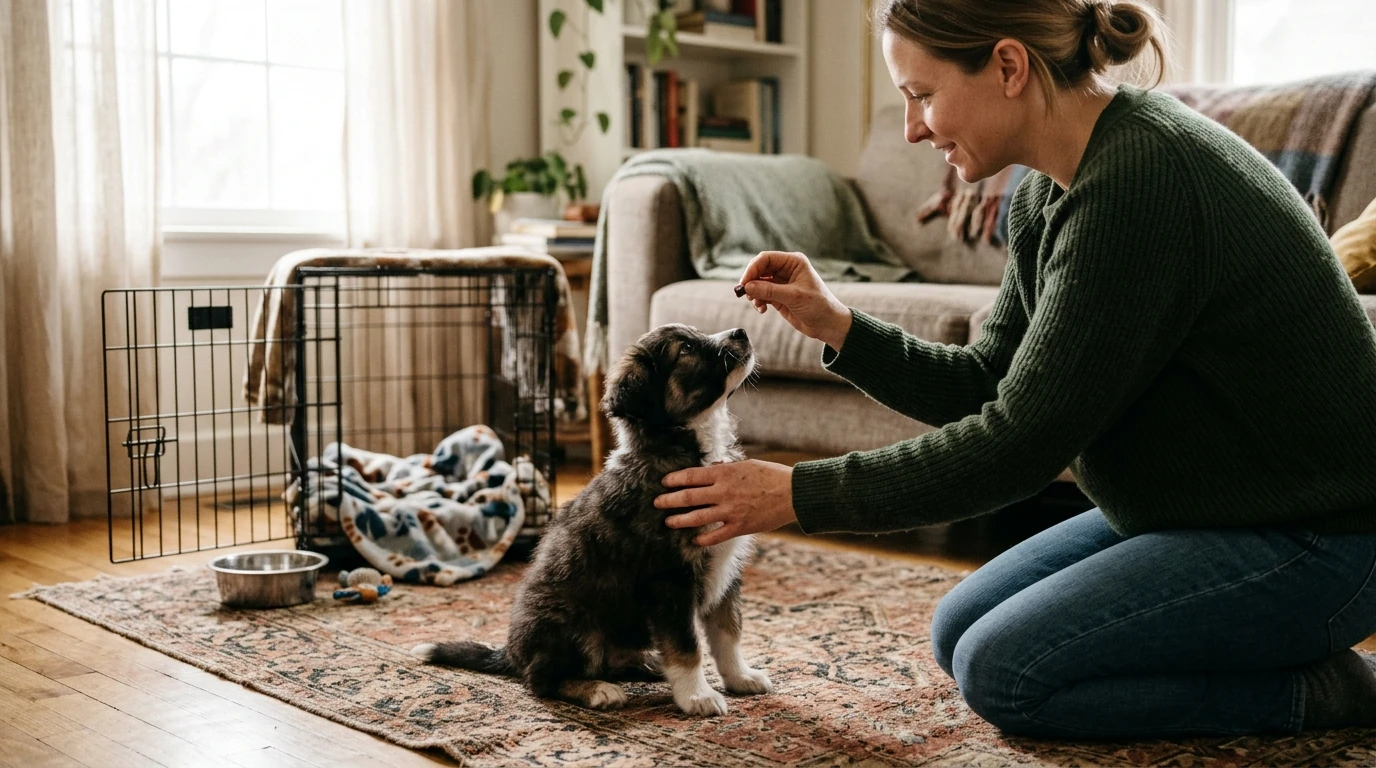
Bringing a puppy home can be joyful, busy, and a little unpredictable. A few simple habits can make the first month feel more manageable for both of you: offer regular potty breaks, reward behaviors you want to see again, and introduce new experiences gently.
Our printable New Puppy Training Starter Guide gives you a beginner-friendly way to organize the first four weeks. Use it as a starting point, then adjust your plans to suit your puppy’s needs and your household.
Start With a Routine Your Puppy Can Follow
Consistent meal, rest, play, and potty times help you anticipate what your puppy needs. You don’t need to schedule every minute, but a predictable rhythm makes it easier to spot patterns and prevent accidents.
Take your puppy to the same designated potty spot after waking, eating, and playing. Give them a little time to settle, and reward them promptly when they finish outside. A small treat and calm praise help connect the reward with the behavior.
Expect the schedule to change as you learn more about your puppy. Puppies develop at different rates and need plenty of sleep, so leave room for rest and keep activities short.
A Simple Starting Routine
| When | Activity | Helpful Habit |
|---|---|---|
| After waking | Potty break | Reward when the puppy finishes outside |
| After a meal | Potty break and quiet time | Watch for signs that another break is needed |
| During play | Short training practice | Reward attention and simple behaviors |
| Before bed | Final potty break | Keep the evening calm and predictable |
Make House-Training Positive
When your puppy is indoors, supervision gives you a chance to notice sniffing, circling, or wandering away. If you see these signs, take them to their potty spot promptly. Reward a successful trip outside rather than waiting until you’re back indoors.
Accidents are part of learning. Clean them without punishment, and consider whether your puppy needs more frequent breaks or closer supervision. Punishment after an accident won’t teach your puppy where to go and can make them wary of you.
A comfortable crate or puppy-safe pen can help when you can’t supervise closely, but introduce it gradually. Let your puppy explore it willingly, pair it with treats, and avoid using confinement as punishment. Provide potty breaks suited to your puppy’s age and needs. For more practical guidance, see Humane World for Animals’ house-training advice.
Build First Commands Through Short Sessions
Start with your puppy’s name. Say it once in a cheerful tone, and reward them when they look at you. Practice in a quiet room where it’s easy for your puppy to succeed. This attention is useful when you’re ready to introduce other cues.
For “sit,” hold a treat near your puppy’s nose and slowly move it upward so they naturally settle back. Reward as soon as their bottom touches the floor. For “come,” begin a short distance away, say the cue brightly, and reward your puppy when they reach you. Avoid calling them only when something they dislike is about to happen.
Keep repetitions brief and finish while your puppy is still interested. Once a cue is becoming familiar in a quiet setting, try it in another room or with a small distraction. If your puppy struggles, make the exercise easier rather than repeating the cue over and over.
Introduce the World at Your Puppy’s Pace
Socialization is about helping your puppy feel comfortable with new experiences, not meeting every person or dog at once. Introduce gentle sounds, different surfaces, friendly people, and everyday household activity in small doses. Pair a new experience with treats or praise while your puppy remains comfortable.
Give your puppy space if they seem worried. Let them move away, and try again later at a distance or intensity they can handle. Don’t force greetings or hold them in place to face something frightening.
Early positive experiences matter, including while vaccinations are underway. Ask your veterinarian which settings and precautions are appropriate for your puppy and your area. The American Veterinary Society of Animal Behavior’s puppy socialization statement offers additional context.
Put Your Four-Week Plan to Work
Our New Puppy Training Starter Guide is a printable beginner resource covering a four-week routine, house-training, commands, and socialization. It’s available for $65.99.
Use the guide to organize your practice, not as a deadline your puppy must meet. You might spend extra time on potty habits one week or return to quiet name practice when a new environment feels distracting. Share the routine with others in your household so everyone can use the same cues and reward the same behaviors.
If you also enjoy working through everyday decisions with a structured resource, explore our Critical Thinking & Problem Solving eBook. It’s a general life-skills guide rather than a puppy-training resource.
FAQ
What is the first thing you should teach a new puppy?
Start by rewarding your puppy for responding to their name and giving you attention, while establishing a consistent potty routine.
How often should a new puppy practice commands?
Practice in brief, positive sessions throughout the day. Stop before your puppy becomes tired or frustrated.
Can a puppy socialize before completing vaccinations?
Yes, early positive experiences are important, but ask your veterinarian about appropriate settings and precautions for your puppy.












Leave a comment